
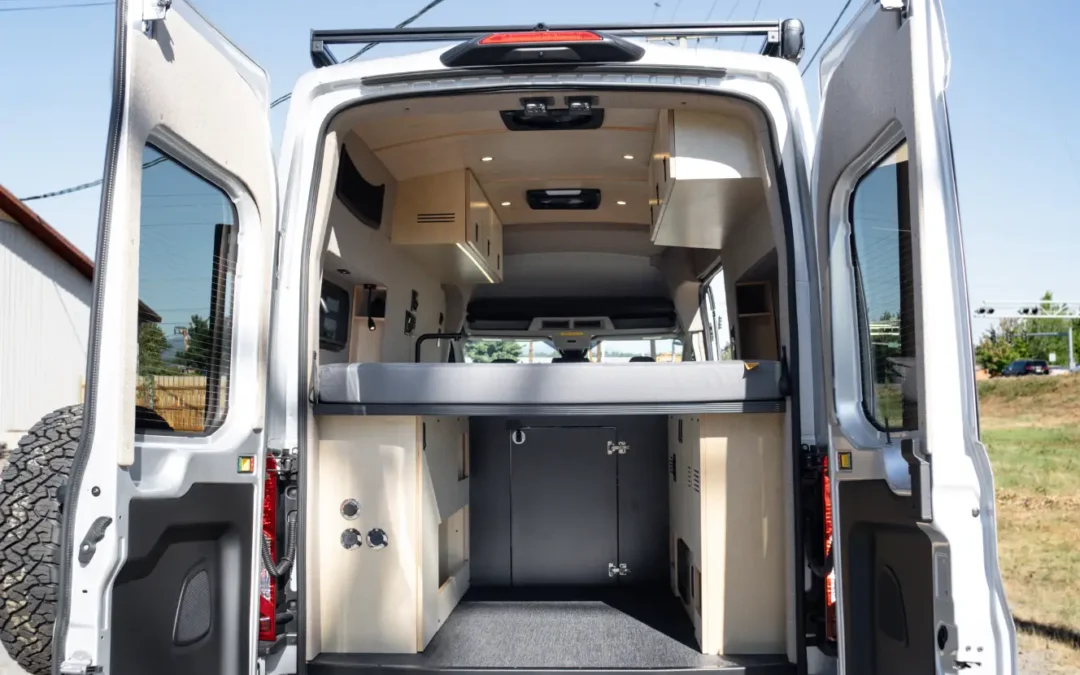
You’ve found the van. You’ve saved a hundred layout ideas. Now comes the question that shapes everything else: when can you actually hit the road?
So, how long does a van conversion take when a professional builder handles the work? Most full custom builds need roughly two to four months of active build time, plus whatever wait applies before your van gets a spot on the schedule. Here in Marysville, Washington, we see people plan their first big trip around that number, so it’s worth getting right. Below, you’ll find the real phases, what speeds things up and what quietly slows things down. If you’re still exploring custom van builds, this will help you plan with confidence.
How Long Does a Van Conversion Take? The Short Answer
A professional, full custom van conversion typically takes 8–16 weeks of active build time. Simpler layouts sit near the low end. Four-season, off-grid builds with custom cabinetry, lithium power and full plumbing usually land toward the high end.
That number covers the hands-on build only. It doesn’t include the time between your first conversation and the day your van enters the shop. We’ll cover that gap in a moment, because it catches a lot of people off guard.
Treat these ranges as typical for professional work, not a promise. Your exact schedule depends on your design, your van and your parts list and it gets confirmed during consultation.
Professional vs. DIY: Why the Timeline Gap Is So Big
Owners who build their own vans report anywhere from about 185 to 1,000 hours of labor and that doesn’t count research and planning. Spread across nights and weekends, that’s commonly 8 to 24 months from start to finish.
A professional shop closes that gap for a few practical reasons:
– Full-time crews work the build every day instead of every other weekend.
– Systems like wiring, insulation and plumbing are done in a proven order, which prevents rework.
– Established suppliers mean fewer surprises when ordering components.
– Experience shortens the decisions that stall first-time builders for weeks.
Speed isn’t the only benefit. A well-sequenced build also tends to be quieter, tighter and more reliable on the road. That matters when you’re planning to live in the van through a Pacific Northwest winter.
What Happens in a Professional Van Conversion, Phase by Phase
Every build is different, but the sequence follows the same logic. Each stage depends on the one before it, which is why rushing one step usually costs time later.
1. Consultation and Design (about 2–4 weeks)
This is where your build gets defined. You talk through how you travel, who’s coming along and what the van needs to handle. Sleeping layout, workspace, storage, power needs and climate goals all get settled here.
The design phase can feel slow when you’re eager to start. It’s the best investment of time in the entire project. A locked design means fewer changes and fewer changes mean a steadier schedule.
2. Procurement and Ordering (runs alongside design)
Once the design is approved, parts get ordered. Some arrive in days. Others, like windows, roof racks, awnings and specialty appliances, can take weeks or longer. Ordering early keeps the build from stalling while a single box ships.
3. Exterior Modifications (about 1 week)
Anything that cuts into the van happens first. That includes windows, roof vents and mounting points. These changes must be finished before wiring, insulation and interior paneling go in.
4. Pre-Wire and Insulation (about 1–2 weeks)
Electrical pathways are routed while the van’s interior structure is still open. Running wire after the walls are up is close to impossible, so timing matters here. Insulation follows, sealing the shell for temperature control and noise reduction.
For anyone planning cold weather travel, this stage deserves extra attention. Good insulation is the foundation of a comfortable four season van.
5. Interior Fabrication (about 3–6 weeks)
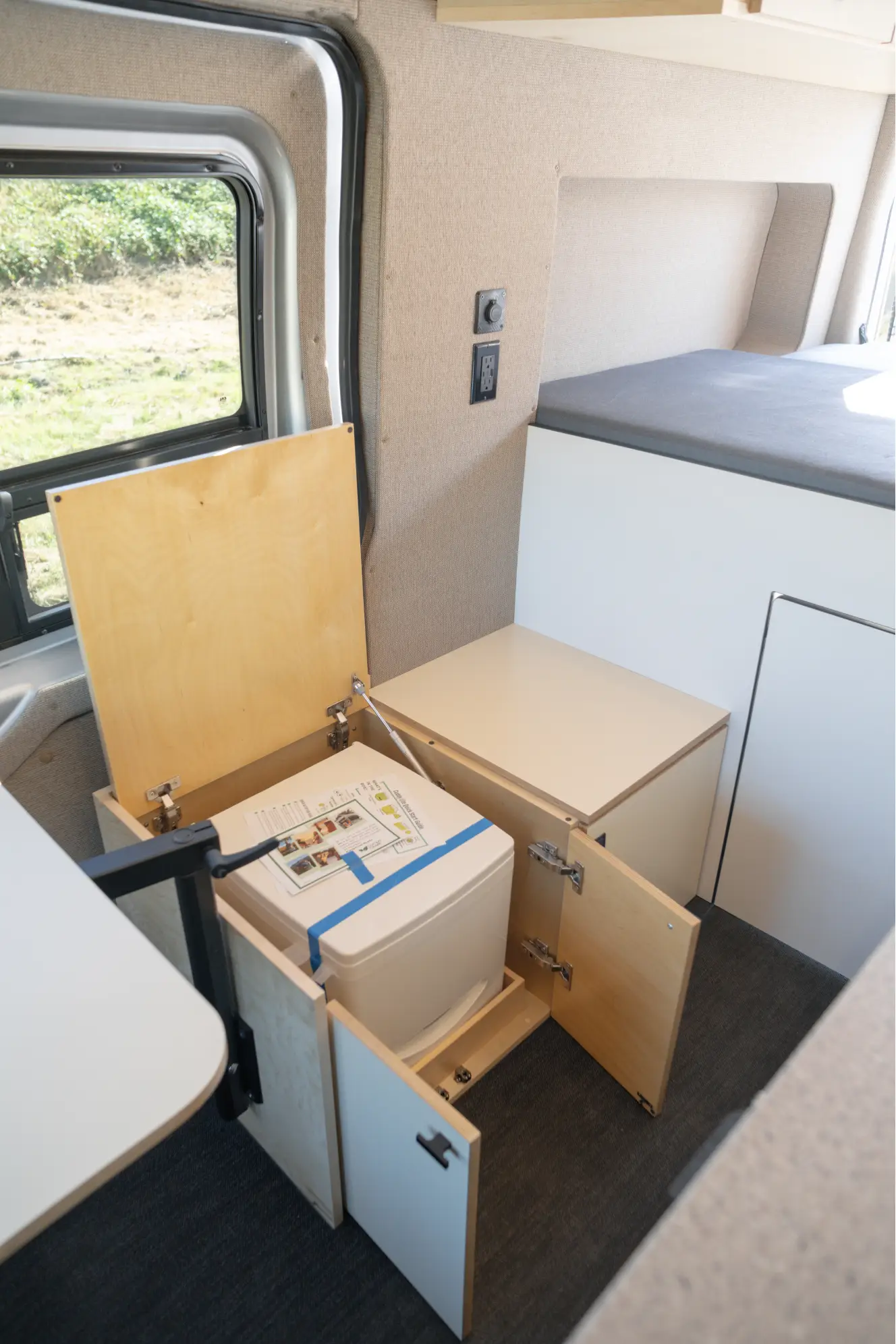
This is usually the longest stretch. Cabinetry, bed platforms, flooring, ceiling panels and wall surfaces take shape. Custom woodwork and detailed finishes take real time to do properly, which is exactly why this phase shouldn’t be squeezed.
6. Electrical, Plumbing, Heating and Testing (about 1–2 weeks)
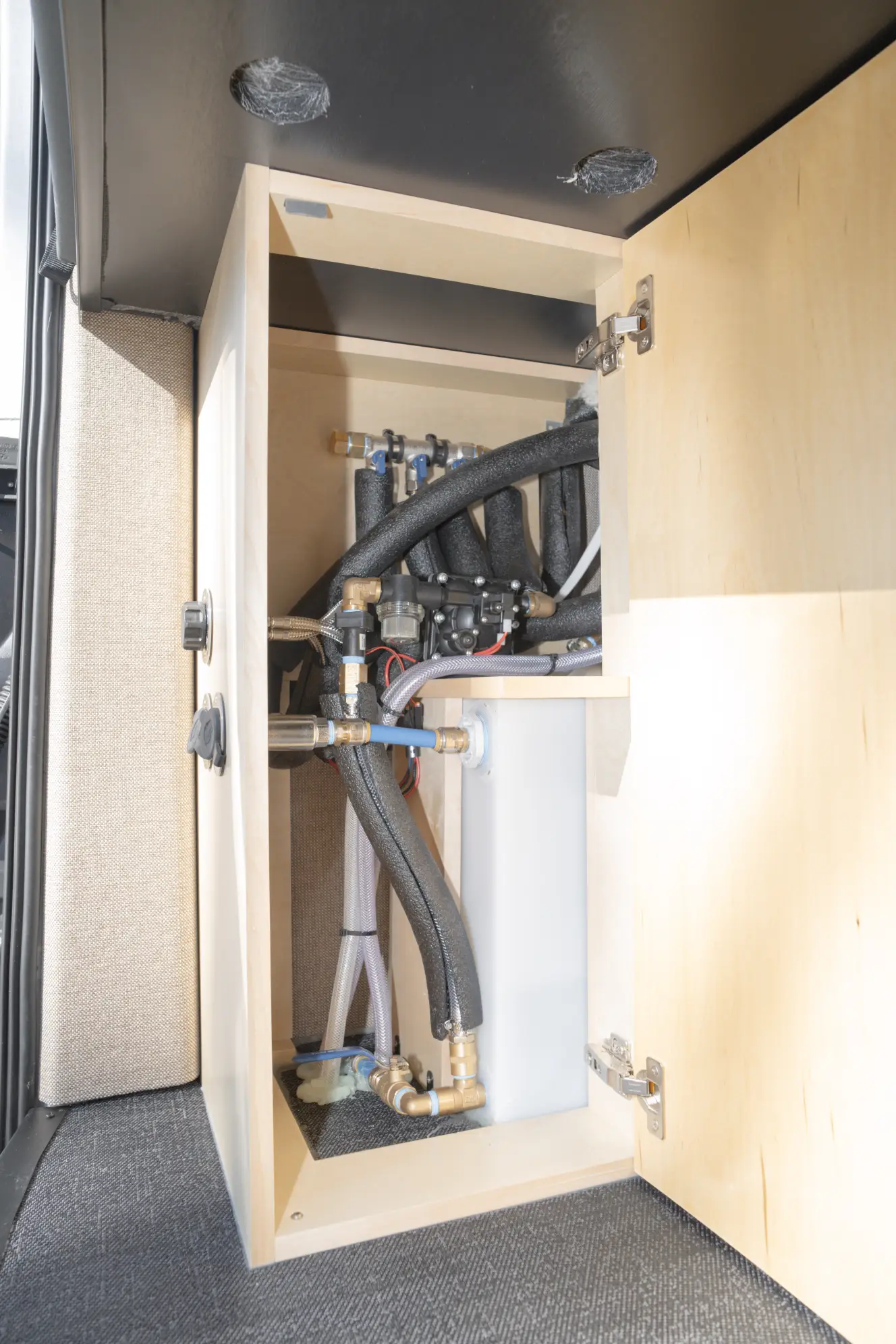
Batteries, inverters, solar connections, fuse panels, water systems and heating get connected. Then everything gets tested under load. Water lines are checked for leaks, circuits are verified and the ventilation and heating systems are run.
7. Finish Work, Final Inspection and Handoff (about 1–2 weeks)
Trim, hardware, soft goods and final adjustments come last. A quality check catches anything that needs refining before you see the van. Then comes a walkthrough, where you learn how every system works.
One more detail worth planning for is weight. Add ons like batteries, water tanks and cabinetry affect how much payload you have left, so it’s smart to understand your vehicle’s weight ratings through the National Highway Traffic Safety Administration before finalizing your equipment list.
If you want to see how these phases fit into the full ownership journey, our van build guide walks through it step by step.
What Affects Your Van Conversion Timeline?
Two builds that look similar on paper can finish weeks apart. These are the factors that make the difference.
Long-Lead Parts
Windows, awnings, racks and certain appliances are the usual culprits. If one item is backordered, a good builder reorganizes the work around it. Even so, a few components can only wait so long.
Build Scope and Complexity
A simple weekender is a different project from a fully off-grid rig with a large lithium battery bank, integrated plumbing and a diesel or propane heating system. More systems mean more installation, more testing and more time.
Design Changes Mid-Build
This is the biggest avoidable delay. Moving a bed, adding a shower or upsizing the battery bank after cabinetry is built can mean reworking wiring, plumbing and woodwork. Small tweaks are fine. Big layout changes cost real weeks.
Decision Speed
Builds move fastest when material, finish and appliance choices get made promptly. Pro tip: if you’re unsure on a finish, ask to see samples early rather than waiting until fabrication is underway.
Your Van Platform
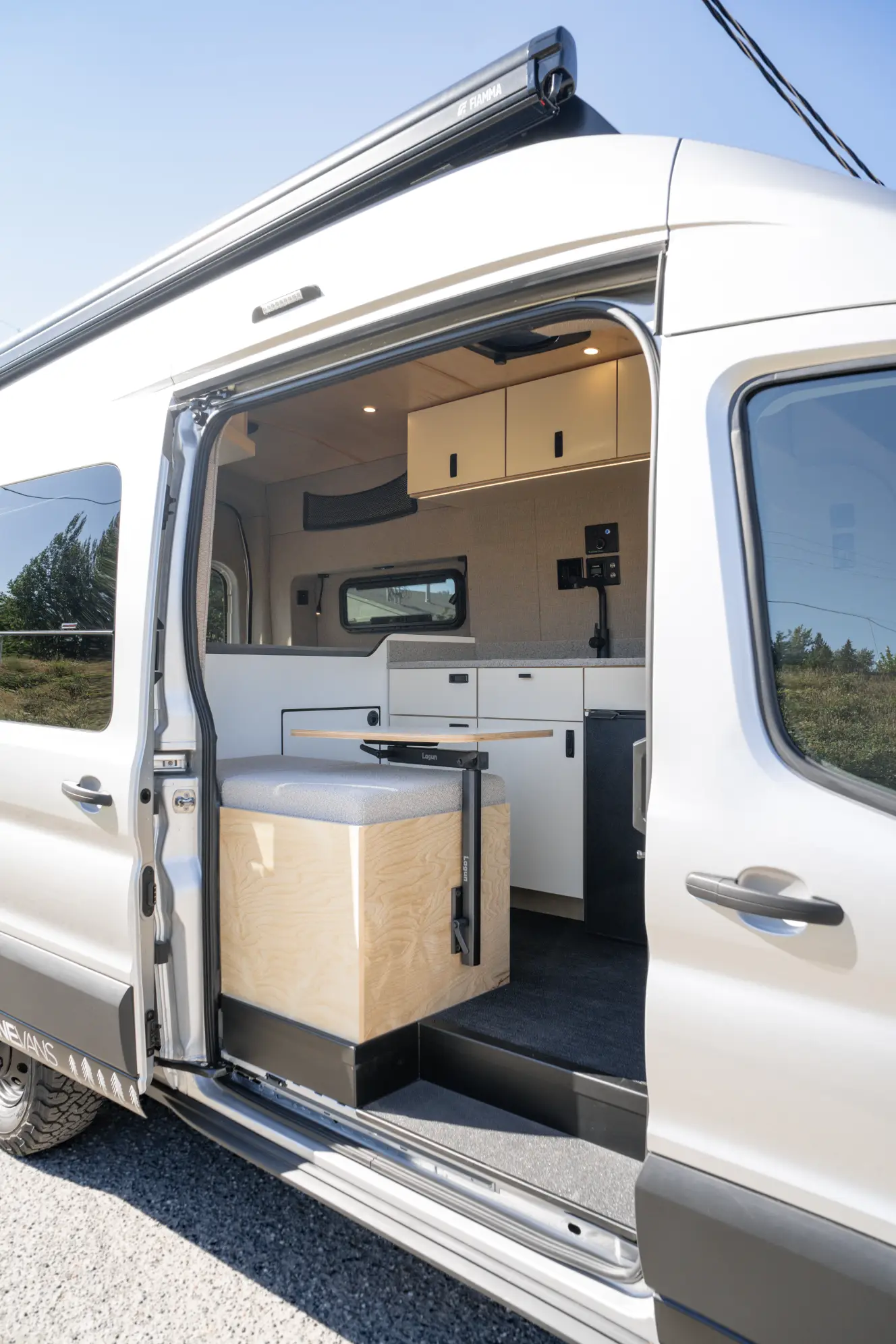
The base vehicle shapes the layout, the insulation approach and the available space. Many of our customers choose the Ford Transit for its wide, boxy interior and flexibility for layouts. You can compare featured van options to see how different configurations are put together.
How Far in Advance Should You Book a Custom Van Conversion?
Build time and lead time are two different things and mixing them up is the most common planning mistake.
Build time is how long the van spends being converted. Lead time is how long you wait before that work begins. Professional shops often keep a schedule of upcoming builds, so the wait can run weeks or months depending on demand.
Here’s a simple rule: if you have a travel date in mind, contact a builder as early as possible, ideally several months before you need the van. Ask directly about current availability, then work backward from your target date.
Planning to head out before winter? Start earlier than you think. Fall tends to be a busy season for people who want to be ready for cold-weather travel.
Does a Four-Season Build Take Longer?
Usually, yes and for good reasons. Four-season capability adds insulation detail, heating, ventilation and a stronger electrical system to support them. Each of those pieces has to work with the others.
In the Pacific Northwest, where wet, cold months are part of life, those systems aren’t optional extras for many travelers. They’re what make the van livable in January as well as July. Builders who take comfort seriously give these systems the time they need.
Off-grid builds follow the same logic. Larger battery banks, more solar and bigger water capacity all add installation and testing hours.
How to Keep Your Van Conversion on Schedule
You can’t control shipping, but you can control a surprising amount of the timeline. Here’s what helps most:
– Settle your layout before ordering. Treat the design as final once it’s approved.
– Decide on big-ticket items early, including windows, fridge, heater and battery size.
– Respond quickly when your builder needs a decision.
– Be realistic about extras. A “quick add” late in the build is rarely quick.
– Ask for regular progress updates so nothing surprises you at the end.
Good communication shortens projects. A builder who explains the plan clearly and keeps you informed is worth far more than a promised date that slips.
Frequently Asked Questions
How long does a professional van conversion usually take?
Most full custom conversions take about 8–16 weeks of active build time, depending on complexity. Waiting for a build slot is a separate period and varies with demand.
How long is the design phase for a custom van?
Plan on roughly 2–4 weeks for consultation, layout planning and final design approval. Complex four-season or off-grid builds may take a little longer.
Can I speed up my van conversion?
Yes. Finalize your design early, choose major components quickly and avoid layout changes once the build begins. Those three habits prevent most delays.
What can delay a professional van conversion?
Backordered parts, mid-build design changes, slow decisions and unexpected vehicle issues are the most common causes. A well-planned build avoids most of them.
Does the type of van change the timeline?
It can. The base vehicle affects layout, insulation and system placement. Platform choice matters less than design complexity, but it’s worth discussing early.
How far in advance should I book?
As early as possible. If you have a travel date, contact a builder several months ahead and ask about current availability.
Ready to Plan Your Build in Marysville, Washington?
A realistic timeline starts with an honest conversation about your goals, your travel plans and the kind of van you want to live in. That’s where a great build begins.
If you’re ready to get specific, start your van build questionnaire and tell us what you’re picturing. Prefer to talk it through first? Contact Treeline Vans and we’ll help you map out a timeline that fits your plans.
Treeline Vans builds premium custom adventure vans in Marysville, Washington, for travelers across the Pacific Northwest and beyond.
Recent Comments