
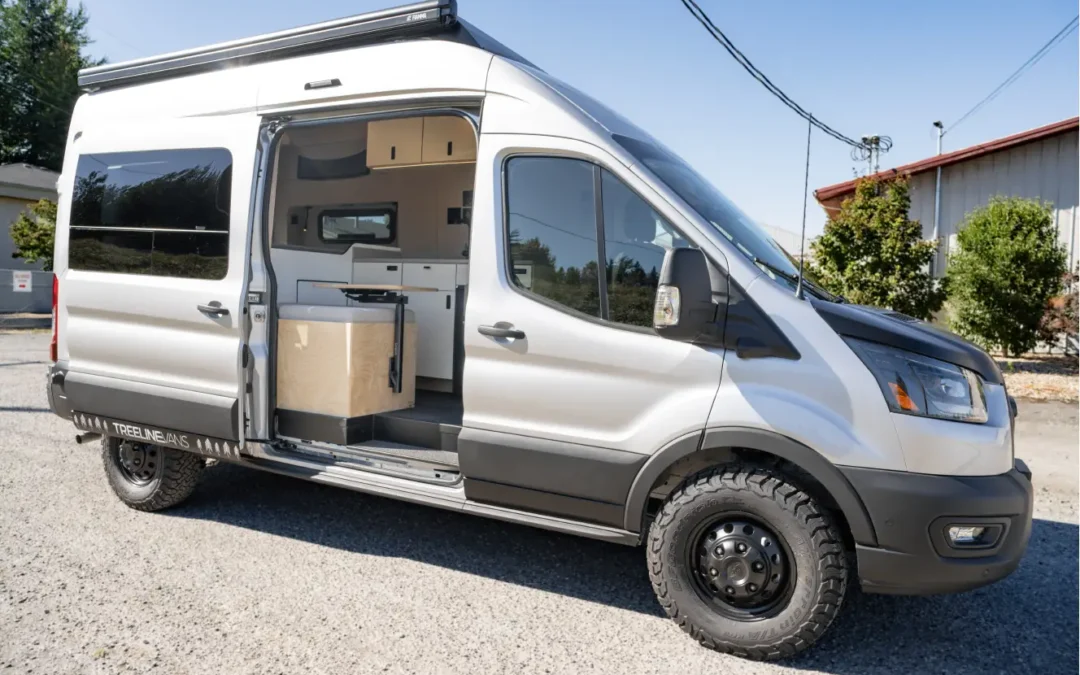
You found a clean Transit, the price looks fair, and now one question is keeping you up at night: is Ford Transit good for camper conversion, or are you about to build a dream rig on the wrong chassis? For most travelers, the answer is yes. It’s wide, it’s tall, and it gives a builder more usable floor space per dollar than almost any other full-size van. It also has real tradeoffs, and a van this important deserves an honest look at both sides. Here in Marysville, Washington, we see which of those tradeoffs matter on wet, winding Pacific Northwest roads.
Quick answer: Is the Ford Transit a good camper van?
Yes. The Ford Transit is a strong camper van platform thanks to its wide, boxy cargo area, low load floor, and high roof option with roughly 6 feet 3 inches of standing room. Front-wheel drive and lower ground clearance are the main compromises. For road trips, remote work, and four-season travel, it’s a smart foundation when the build is planned around weight and insulation.

Why builders choose the Ford Transit for camper conversion
Walk into a Transit cargo van and the first thing you notice is how square it is. The walls run nearly straight up, so cabinets sit flush and you lose less space to curves. That matters more than it sounds. Every inch of width changes how a bed, kitchen, and storage plan fit together.
A few reasons builders keep coming back to it:
- Front-wheel drive means there’s no driveshaft tunnel, so the floor is flat and low.
- The low step-in height is easier on knees, which matters if you’ll climb in and out daily for years.
- The high roof gives most adults room to stand and move around.
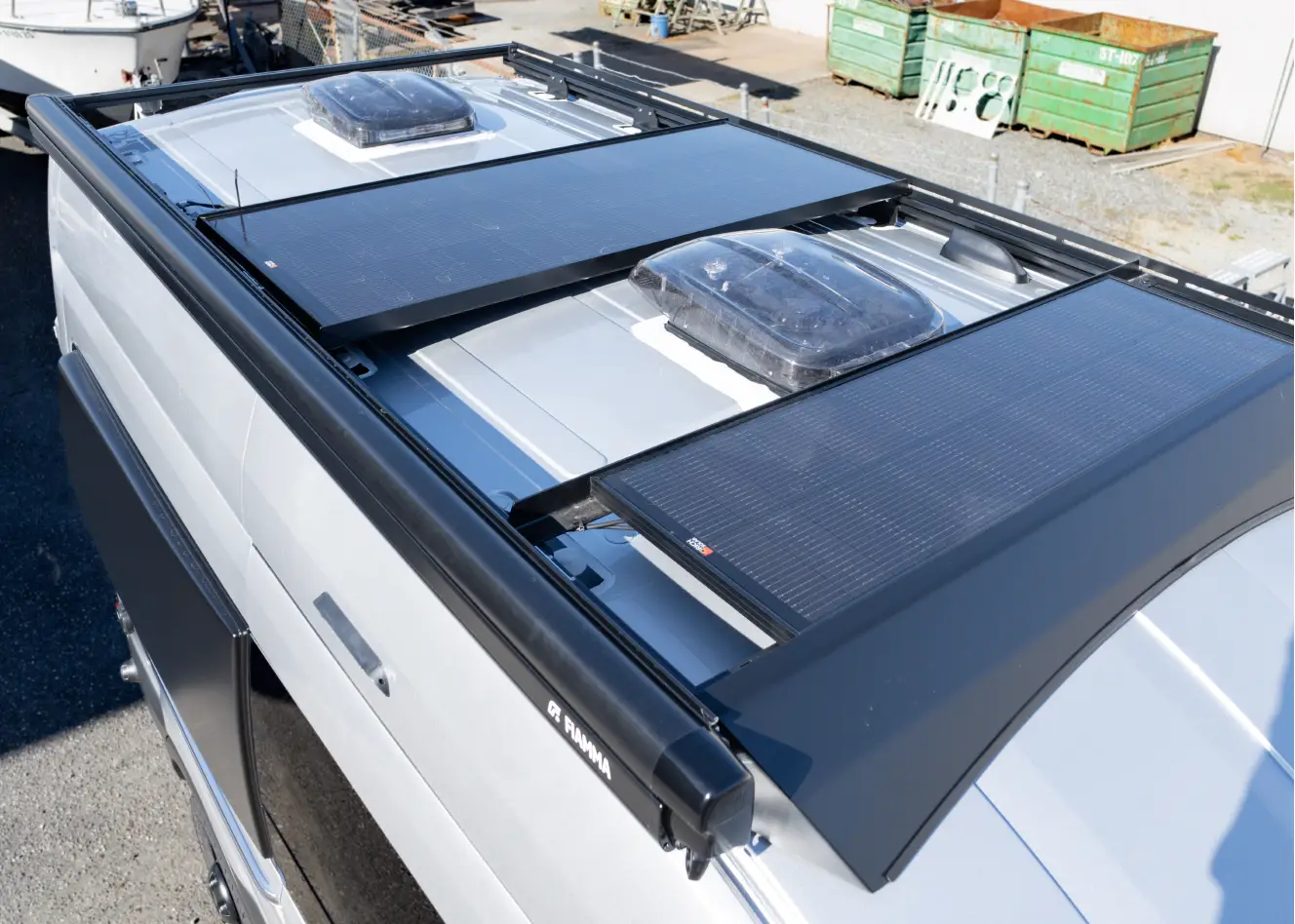
- The flat roof offers generous room for solar panels, a vent fan, and a roof rack.
- A wide rear opening makes loading bikes, boards, and gear far less of a puzzle.
Those traits are why a Ford Transit camper van conversion often feels bigger inside than the exterior suggests, especially on the longer wheelbases.
Ford Transit conversion pros and cons
Let’s lay it out plainly.
Pros
- Excellent interior width and cargo volume
- Low floor and easy entry
- Standing height in the high roof models
- Simple, flat roof for solar and ventilation
- Wide range of layouts, from a compact couples’ build to a full-time home
Cons
- Front-wheel drive is less confident than rear-wheel or four-wheel drive on steep, loose, or snowy ground
- Lower ground clearance limits truly rugged trails
- Fewer factory off-road upgrades than some competitors
- Payload is finite, so heavy builds need careful planning
Neither list is a dealbreaker on its own. The question is whether the cons collide with how you actually travel.
Is Ford Transit reliable for camper conversion?
This is where internet opinion gets loud. Search any RV forum and you’ll find owners who love their ProMasters and a few who’ve had a rough time. That’s true for every van brand.
What we can say with confidence is that condition and history matter more than the badge. A well-maintained ProMaster with documented service is a very different purchase from a neglected fleet unit with unknown miles. Most ProMasters carry the 3.6-liter Pentastar V6, and newer models pair it with a nine-speed automatic. Both are common, well understood, and serviced by plenty of shops across the country, which is a real advantage when you’re far from home.
Pro tip: Before you buy any used van for conversion, run the VIN through the NHTSA recall lookup and get an independent pre-purchase inspection. A few hundred dollars up front can save a very painful surprise after the cabinets are installed.
Also, plan for your own maintenance habits. Long-term travel means more miles, so keep a log, stay ahead of fluids and brakes, and don’t ignore small noises.
Is front-wheel drive a problem for winter and off-grid travel?
For most people, no. For some, yes.
Front-wheel drive puts weight over the drive wheels, which helps traction on wet pavement and light snow. The ProMaster’s rear sits a bit light when it’s empty, but a finished build with cabinets, water, and batteries adds weight where it’s needed. Good winter tires make a bigger difference than most buyers expect.
If you’re crossing Snoqualmie or Stevens Pass in January, you’ll want chains in the van and a habit of checking conditions first. The Washington State Department of Transportation posts live mountain pass conditions and traction requirements that every Cascade traveler should bookmark.
Where the ProMaster struggles is deep sand, steep rutted forest roads, and technical rock. If your idea of adventure includes regular trail work, a higher-clearance platform may suit you better. If it’s national parks, trailheads, dispersed camping on gravel roads, and ski towns, a properly built ProMaster handles it well.
Which For is best for camper conversion?
Three choices shape your build: wheelbase, roof height, and weight rating.
Wheelbase. The 136-inch wheelbase is easier to park and drive in cities and tight campgrounds. The 159-inch wheelbase gives you room for a real bed, a kitchen, and often a dedicated wet space. The 159 extended adds more length again, which suits couples who work and live in the van full time.
Roof height. If you want to stand up, choose the high roof. It’s the most popular option for a reason.
Weight rating. The 1500, 2500, and 3500 differ mainly in payload and suspension. For many conversions, the 2500 is the sweet spot. Heavier, feature-rich builds with big battery banks, water tanks, and gear often benefit from a higher rating. Always check the payload sticker on the door jamb for the exact van, because it varies by configuration.
If you’re not sure where your plans land, our van conversion build guide walks through each decision in order.
How does the ProMaster compare to the Ford Transit and Mercedes Sprinter?
Short version: the Transit wins that offers all-wheel-drive options, the ProMaster has a good interior width and floor height, and the Sprinter brings a premium feel with a higher purchase and repair cost.
None of them is the wrong answer. The right van is the one that fits your layout, climate, and budget. If you want a flat, roomy canvas for a comfortable interior, the Transit is hard to beat.
Can a Transit handle four-season and off-grid living?
Absolutely, if the build is designed for it.
Four-season comfort comes from the system, not the van. That means well-planned insulation, controlled ventilation, an efficient heating setup, and moisture management. In our damp Pacific Northwest climate, condensation is the quiet enemy of any van, so airflow and vapor control matter as much as warmth.
Off-grid capability follows the same logic. The ProMaster’s roof has room for solar, and the floor plan can fit a lithium battery bank, an inverter, and fresh and gray water tanks. The trick is balancing capacity against payload. More isn’t always better if it pushes you over your weight rating.
This is exactly where professional design pays off. A thoughtful builder sizes every system to the van and to the way you’ll live in it.
How much does a Ford Transit camper conversion cost?
It depends, and anyone who quotes a single number without asking questions isn’t being straight with you.
Cost is shaped by the van you start with, wheelbase, layout, electrical capacity, heating, water systems, cabinetry, and finish level. A simple weekend build and a full-time, off-grid home are very different projects. A professional conversion is a larger investment than a DIY kit, but it also brings engineered systems, consistent craftsmanship, and a finished van you can trust far from a repair shop.
To see how your priorities shape the total, browse our custom van builds for real examples of what’s possible.
Who should choose a ProMaster camper conversion?
It’s a great fit if you want maximum interior space, plan to travel on paved and maintained gravel roads, work remotely from the road, or want a comfortable home base for long trips. It’s a thoughtful choice for couples, retirees, and anyone who wants a premium alternative to a factory RV.
It’s less ideal if your trips are mostly technical off-road terrain.
Frequently asked questions
Is the Ford Transit good for full-time van life?
Yes. Its width and standing height make daily living comfortable, and the 159 wheelbase suits full-time layouts well.
Is the Ford Transit 250 good for camper conversion?
For many builds, yes. It balances payload and cost well, though heavy off-grid systems may call for a higher weight rating.
Can a Ford Transit be a four-season camper?
Yes, with proper insulation, ventilation, and heating designed into the build.
Can you stand up in a Ford Transit high roof?
Most adults can. The high roof offers roughly 6 feet 3 inches of interior height, which insulation and flooring reduce slightly.
Is front-wheel drive good for a camper van?
It’s solid on pavement and light snow. It’s less capable on steep, loose, or deep terrain.

Ready to build your Transit?
You don’t have to guess your way through a decision this big. Treeline Vans designs and builds premium custom Ford Transit conversions right here in Seattle, Washington, for travelers across the country. Tell us how you want to live on the road, and we’ll help you choose the right wheelbase, layout, and systems. Start your van build inquiry today and let’s get your adventure moving.
Recent Comments