

Picture this. It’s 19°F outside, the windows are dry, the floor under your bare feet is warm and your coffee is brewing while snow piles up on the roof. That’s what a properly built four-season van feels like. Now picture the other version: frost inside the walls, a dead battery and a frozen water line on day two.
So, what is a 4 season camper van? It’s a camper van engineered to stay comfortable, dry and safe in every kind of weather, from summer heat to below-freezing nights, without you babysitting it. Plenty of vans carry the label. Far fewer earn it.
If you’re planning a custom build from the Pacific Northwest, where damp winters and mountain passes come standard, this guide will show you exactly what separates a real four-season camper van from a marketing claim. If you’d rather see finished work first, browse our custom van builds from our shop in Marysville, Washington.
The Short Answer: What Makes a Camper Van Four-Season?
A four-season van manages four things at once: heat, moisture, water and power. Miss one and the whole system suffers.
– **Insulation:** continuous coverage with the thermal bridging handled, not just foam stuffed in the walls.
– **Heating:** a dedicated, properly vented heater sized for the space.
– **Moisture control:** ventilation and vapor management that stop condensation before it starts.
– **Protected systems:** water lines, tanks and batteries kept out of the cold or actively protected from it.
That’s the honest definition. A van that checks only one or two boxes is a three-season van with good intentions.
Insulation: Where Four-Season Builds Are Won or Lost
Everyone talks about R-value. The U.S. Department of Energy’s insulation guide explains it well: it measures resistance to heat flow and higher numbers mean better resistance. In a van, though, the number on the package tells you less than you’d think.
The reason is space. A cargo van gives you a thin cavity and the metal ribs that give the body its strength also conduct cold straight to your interior. That’s thermal bridging. You can fill every pocket and still feel a chill along the ribs if nothing separates them from the cabin.
A well-built van addresses the whole shell:
– Walls and ceiling, including the ribs
– The floor, which loses heat fast and gets forgotten
– Wheel wells and door cavities
– Windows, vents and the cab area, usually the weakest links
Pro tip: if a builder can’t explain how they handle the floor and the windows, keep asking questions. Those two spots decide how a van feels at 6 a.m.
Heating: Warm Without Wasting Power
Most winter-ready vans use a small fuel-fired heater that draws from the vehicle’s tank or a dedicated one. Others use propane. Each approach has trade-offs in fuel type, altitude performance, noise and installation complexity, so the right choice depends on how you travel.
What matters more than the brand is how it’s installed. The unit should draw combustion air and exhaust outside the living space, with the exhaust routed safely away from vents and windows. Any combustion appliance also calls for a carbon monoxide alarm. The CDC’s carbon monoxide resource is worth a read before you sleep in any vehicle with a heater.
Sizing matters too. An oversized heater short-cycles and wastes fuel. An undersized one never catches up on a cold night. A good builder matches the heater to the insulation, the floor plan and the climate you actually plan to travel in.
Condensation: The Problem Most Buyers Don’t See Coming
Here’s something first-time buyers rarely hear. In the Pacific Northwest, moisture usually causes more trouble than raw cold.
You breathe, cook and shower inside a small metal box. That moisture lands on the coldest surface it can find. Without a plan, it ends up behind panels, in the insulation and on the metal, where it can lead to musty smells and corrosion over time.
A true four-season build manages it on purpose:
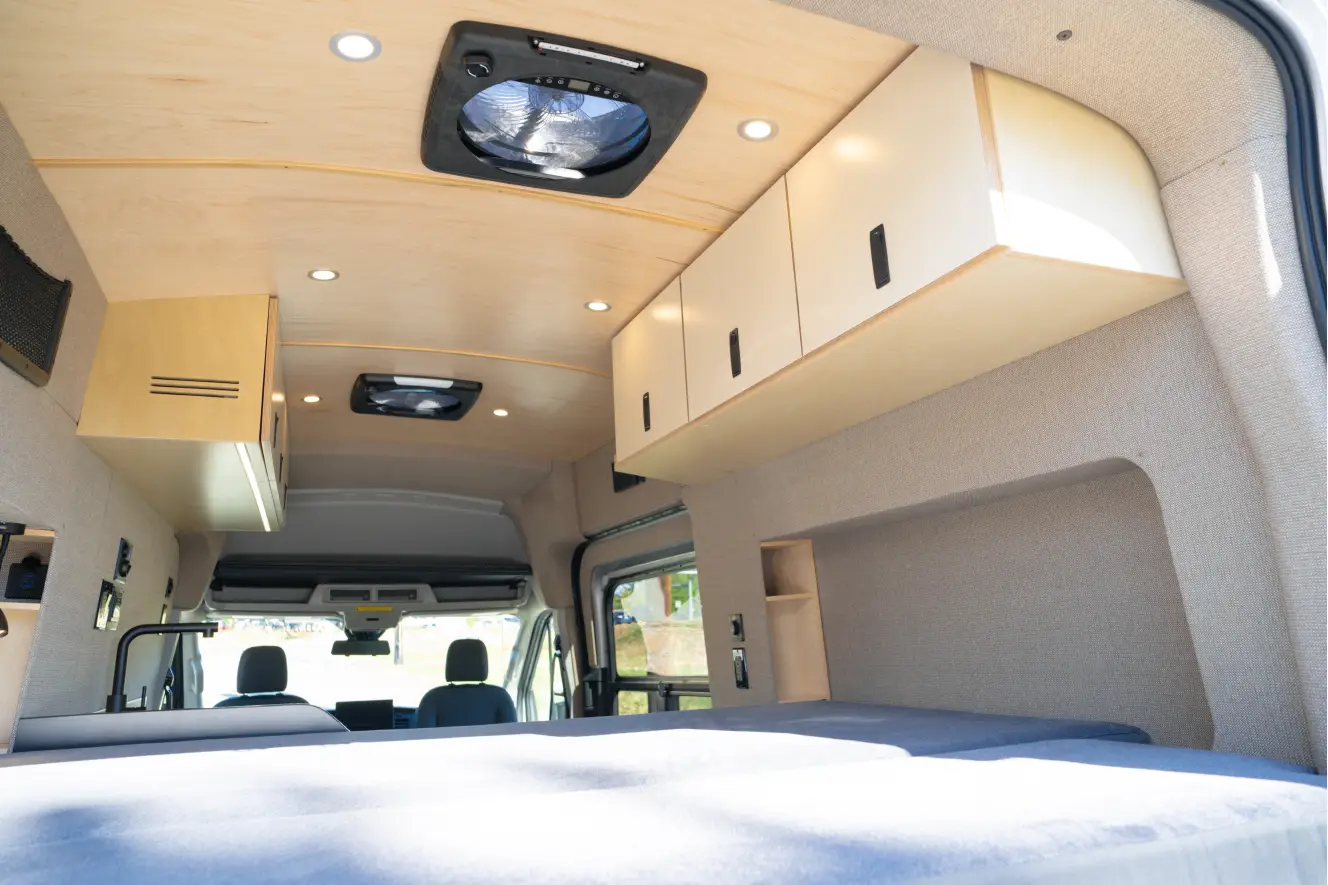
– A powered roof fan that moves humid air out quickly
– Vapor control built into the wall assembly
– Insulation choices that don’t trap water against bare metal
– Air movement that keeps cabinets and bedding from going damp
Think of it this way: warmth keeps you comfortable, but moisture control keeps the van healthy for the next ten years.
Water Systems That Won’t Freeze on You
A frozen pipe can end a trip fast. Four-season water systems start with smart placement: tanks and lines kept inside the insulated envelope wherever possible, not hanging underneath in the airstream.
From there, builders add insulation to the lines, heat to the tanks or both. Many also include a drain-down option for when you park the van for a deep freeze. If you plan to winter in the mountains, ask how the gray water tank is handled too. It’s the one people forget and it’s often the first to freeze.
Batteries and Solar in Cold Weather
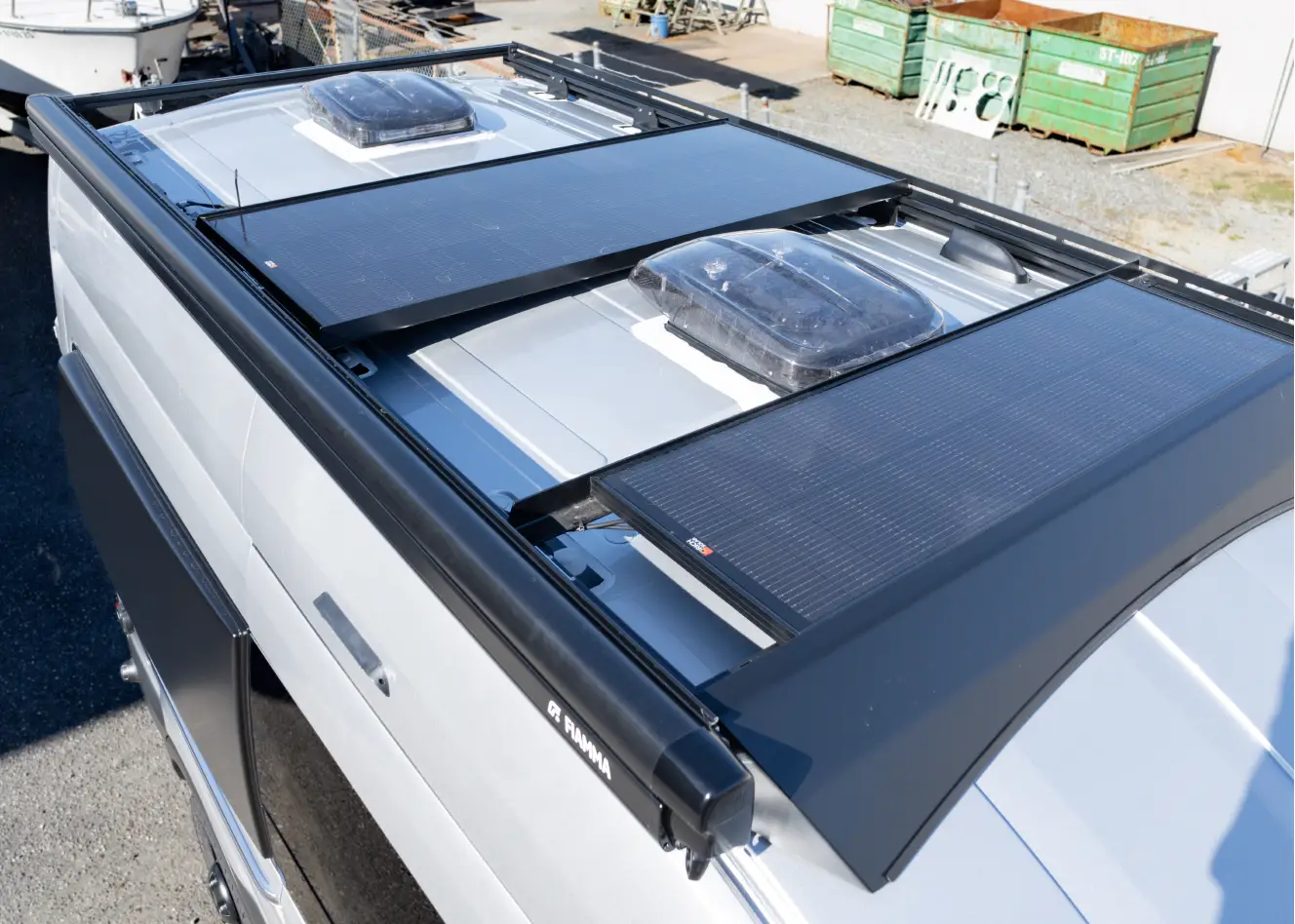
Lithium iron phosphate batteries are popular in camper vans for good reason. They’re light, efficient and long-lasting. They also dislike being charged below freezing. Many have built-in protection or heating and others rely on smart placement inside conditioned space. Either way, the battery location and charging setup should be designed with winter in mind.
Solar still works in winter. It simply produces less, since days are shorter and the sun sits lower. A four-season electrical system accounts for that by sizing the battery bank and the alternate charging sources, like driving or shore power, for the darkest months, not the sunniest ones.
For anyone planning off-grid travel, this is where honest planning pays off. Ask how many days you can run the heater, fridge and fan without a charge. A builder who can answer with a straight face is one you can trust.
Four-Season vs. Winterized: Not the Same Thing
People use these terms interchangeably. They shouldn’t.
A winterized van has been prepared to survive cold weather, usually by draining the water system and storing it. That protects the van, but it doesn’t make it livable.
A four-season van is built so you can live in it comfortably during cold weather. Heat, moisture, water and power all work together while you’re inside. One protects equipment. The other protects your trip.
Why the Van Platform Matters
The base vehicle shapes what’s possible. The Ford Transit is a popular choice for custom conversions because its wide, boxy cargo area gives builders room to work with insulation, layouts and storage. A good conversion treats the van as a complete system instead of a shell to fill with furniture.
If you’re comparing options, our van conversion build guide walks through the decisions in the order they actually matter.

What Should You Look For in a Four-Season Camper Van Conversion?
Use this as a checklist when you’re talking to any builder:
- Can they explain how they handle thermal bridging, floors and windows?
- Where is the heater exhausted and what safety equipment comes with it?
- How does the van control moisture while you’re living in it?
- Are the water tanks and lines protected from freezing?
- How does the battery system behave in cold weather?
- Does the layout still work when you’re stuck inside during a storm?
That last question matters more than people expect. A four-season van isn’t just technical. It needs a floor plan, storage and seating that make a long snowy week feel good, not cramped.
Is a Four-Season Camper Van Worth It?
For most people planning to travel beyond summer, yes. A van that handles all seasons stretches your travel calendar. Ski trips, shoulder-season hikes, work from the road in February and long stretches of full-time living all become realistic.
It also holds up better. Proper moisture control and protected systems reduce the slow damage a poorly managed van takes on over the years. You’ll pay more upfront for this level of build. You’ll also avoid the expensive fixes that come with cutting corners.
Frequently Asked Questions
What does four season camper van mean?
It means the van is built to stay comfortable and functional in all weather, including freezing temperatures, thanks to proper insulation, heating, moisture control and protected water and power systems.
Can you use a camper van in winter?
Yes, if it’s set up for it. A van with good insulation, a safe heater, ventilation and freeze protection can handle winter travel. A summer-oriented van usually can’t.
Can a Ford Transit be converted for four-season use?
Yes. Its roomy, boxy interior suits a full four-season build when the insulation, heating and ventilation are planned together.
How do you stop condensation in a camper van in winter?
Combine ventilation, vapor control and insulation that doesn’t trap moisture. Running a roof fan while cooking or showering helps a lot.
Do lithium batteries work in freezing temperatures?
They’ll discharge in the cold, but most shouldn’t be charged below freezing unless they have heating or protection. A good build accounts for this in the battery location and design.
Can you live in a camper van year round?
Yes, with the right build. Full-time living puts real demands on heating, moisture control and power, so those systems should be designed for it from day one.
Ready to Build a Van That Works in Every Season?
A four-season van isn’t a feature you add at the end. It’s a set of decisions made from the first conversation. If you’re picturing Pacific Northwest winters, ski mornings and long-term travel without a calendar, we’d love to hear what you have in mind.
Tell us about your travel plans through our van build inquiry form and our Marysville, Washington team will help you map out the right build for how you travel.
Recent Comments